NVIDIA RTX 6000 Ada Generation 48GB
The fastest single-slot-width answer to 48GB: 18,176 CUDA cores, 960GB/s and FP32 throughput at 91.1 TFLOPS in a 300W dual-slot card with ECC and four DisplayPort outputs. It does workstation graphics, VDI and mid-size model fine-tuning on the same board — which is why ex-render-farm and ex-VDI pulls are the best value in the 48GB class. Graded stock, tested and shipped from Hong Kong.
Fully Tested & Documented · Hong Kong Warehouse Stock · Worldwide Shipping 3–7 Days · 1-Year Warranty
Hardware Gallery
The RTX 6000 Ada, Up Close
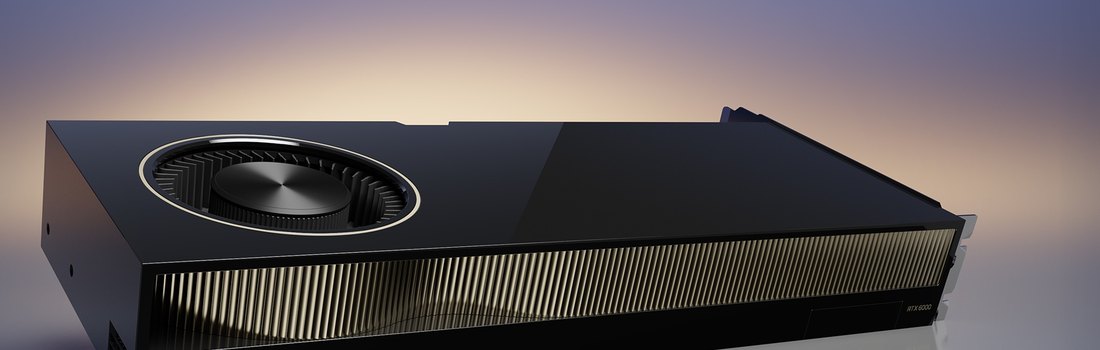
Official NVIDIA Render
The RTX 6000 Ada in reference form: dual-slot, full-height, actively cooled with a blower, fed by a 16-pin connector. Unlike passive data center cards, it carries its own fan — so fan hours and bearing condition are part of what you are buying on the secondary market.
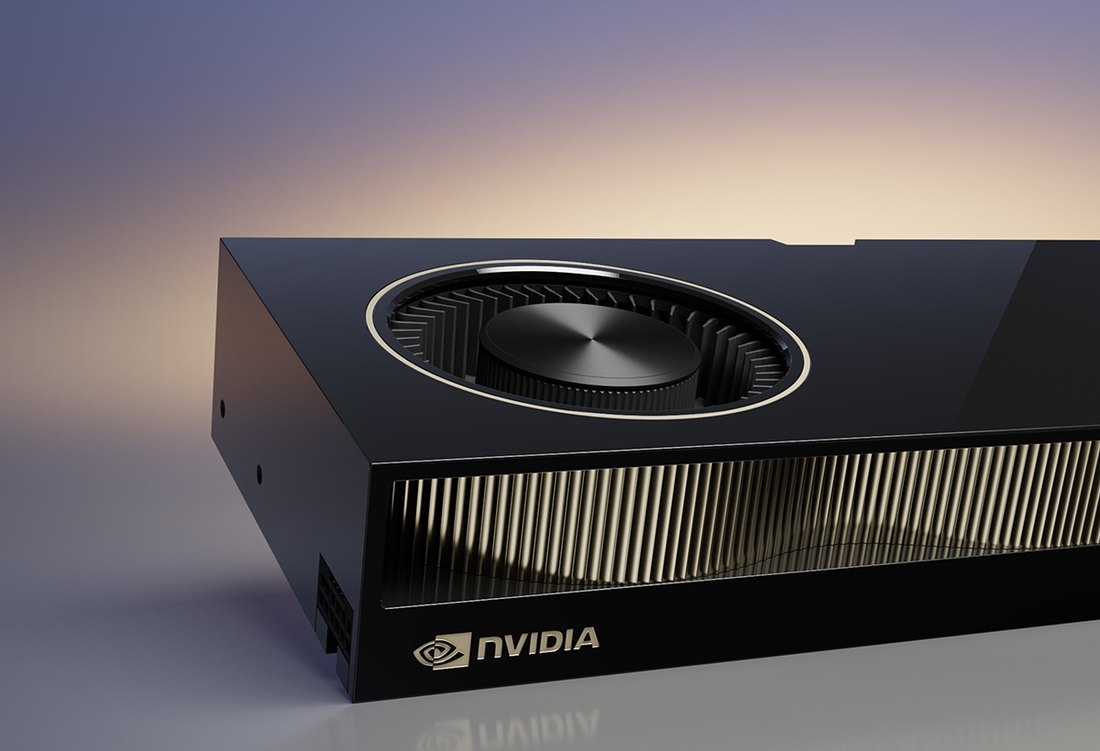
Four DisplayPorts, 300W
Bracket-end angle view: the finned shroud, the single 300W blower and the full-length board. Because this card carries its own fan, fan hours and bearing condition are part of what you are buying on the secondary market — we test under load before shipping. Confirm the DisplayPort bracket configuration your chassis needs at order time; the card is dual-slot full-height.
48
GB GDDR6 with ECC
960
GB/s memory bandwidth
91.1
TFLOPS FP32
300
W TDP, dual-slot
Key Specifications
| Component | Specification |
|---|---|
| Model | NVIDIA RTX 6000 Ada Generation 48GB; PNY, Dell and other OEM-branded boards are the same GPU |
| Architecture | Ada Lovelace, 18,176 CUDA cores, 568 fourth-gen Tensor cores, 142 third-gen RT cores |
| Memory | 48GB GDDR6 with ECC, 960 GB/s |
| Interface | PCIe Gen4 x16, dual-slot full-height, active (blower) cooling |
| Power | 300W TDP, 16-pin (CEM5) power connector |
| Compute | FP32 91.1 TFLOPS |
| Display Outputs | 4x DisplayPort 1.4a |
| Virtualization | vGPU supported (vPC, vApps, RTX vWS, vCS) |
| NVLink | Not supported on the Ada Generation board |
The RTX 6000 Ada is the workstation half of the Ada 48GB family: the same class of AD102 silicon as the L40S, but with display outputs, its own blower cooler and a 300W budget. It is the right board when one machine must render, drive displays and fine-tune mid-size models — and the wrong board when you need HBM bandwidth for serious serving, where an H100 is the honest comparison. For dense headless inference, the low-profile L4 does the same job on slot power alone. Most of our stock arrives from 2U GPU nodes such as the PowerEdge R750, so chassis fit is already proven.
Transparent Pricing
2026 Reference Pricing by Configuration
Tracked Sep 20, 2026 — nine eBay asking prices, and the market splits cleanly into two bands that must be read separately: used and open-box cards, and brand-new sealed cards. The same 48GB board trades in both.
Pre-Owned / Open Box
$6,499-$7,995
Five tracked listings: $6,499.00 Pre-Owned (PNY), $7,499.94 Excellent - Refurbished (NVIDIA), $7,683.20 Pre-Owned (Dell), and $7,994.00 / $7,995.00 Open Box (NVIDIA / PNY). Open-box cards in this band are often indistinguishable from new once the ECC test passes.
Brand New
$8,499-$9,540
Four tracked listings at $8,499.00, $8,579.40, $8,698.80 and $9,539.57 (PNY / NVIDIA SKUs). Buying new costs roughly $500-$2,000 more than the used band for the same silicon, which is the entire argument for graded secondary stock.
Asking prices, not transaction prices — volume deals typically close 5-15% below asking. Sources: eBay seller listings (PNY, NVIDIA and Dell variants, both new and pre-owned). Collected Sep 20, 2026. Full dataset: Used Server Price Index.
Origin
Hong Kong Warehouse
Free port — full export documentation
Transit
3–7 Days Air Freight
Tracked, insured, worldwide
Warranty
1-Year Warranty
Diagnostic report in every box
Quality Process
What We Test Before an RTX 6000 Ada Ships
Blower and Fan Health
Active-cooled cards are the exception in our GPU stock, so fan RPM stability, bearing noise and hours under load are logged. A blower that is quiet at idle and screaming at 300W is recorded, not averaged away.
ECC Actually Enabled
GDDR6 ECC is verified as on and reporting at the driver level, then the full 48GB is scrubbed with error counters logged. Some pulls arrive with ECC disabled in the vBIOS — that is corrected and documented before shipping.
Workstation Provenance Check
Board marking, OEM branding (PNY, Dell and similar) and serial are recorded, and the source fleet declared. Ex-VDI and ex-render-farm cards are sold as such, with the OEM part number on the invoice.
Display Output and vGPU Test
All four DisplayPort outputs are driven simultaneously, and the card is exercised in vGPU mode — the two capabilities that distinguish this board from a headless compute card.
Sustained 300W Thermal Log
Core, memory and hotspot temperatures logged during sustained compute load at rated power. Cards that throttle early are rejected rather than sold as working.
Report in the Box
Every unit ships with its per-machine diagnostic report and warranty. Full process: inspection guide.
Frequently Asked Questions
How much is an NVIDIA RTX 6000 Ada in 2026?
The used and open-box band runs $6,499-$7,995 and brand-new cards ask $8,499-$9,540, across nine eBay asking prices collected Sep 20, 2026. Both bands are the same 48GB board, so the used band is where the value sits — expect to pay roughly $500-$2,000 less than new for a graded card with a burn-in report.
RTX 6000 Ada vs RTX A6000 — what actually changed?
Both are 48GB GDDR6 with ECC on a 300W dual-slot board, so the upgrade is inside the silicon. The Ada card roughly doubles to 2.4x the FP32 throughput (91.1 versus 38.7 TFLOPS) over the Ampere A6000, adds about 25 percent more memory bandwidth (960 versus 768 GB/s) and carries 18,176 CUDA cores against 10,752. One thing you lose: the A6000 supports a 2-way NVLink bridge and the Ada Generation does not. If your pipeline depends on NVLink between two cards, the A6000 is still the answer.
Is the RTX 6000 Ada a data center card or a workstation card?
Both, and that is its selling point. It is a workstation-class board with ECC memory, four DisplayPort outputs and vGPU support, sold for AI and rendering work as well. In practice they arrive in our stock from 2U GPU nodes and VDI hosts, where they served model fine-tuning and virtual workstations side by side. For pure headless inference at scale the L40S or an HBM card is the more efficient buy.
Can I fine-tune an LLM on a 48GB RTX 6000 Ada?
Yes, in the same envelope as any 48GB card: parameter-efficient fine-tuning on 7B-34B class models, quantized serving, and LoRA/QLoRA workflows fit comfortably. What you do not get is HBM bandwidth — 960GB/s of GDDR6 is excellent for a workstation board but well below an A100 80GB or H100, so long-context, high-throughput serving is where this card stops and HBM cards start.
What condition are HKCHL RTX 6000 Ada cards in?
Graded used, open-box and ex-fleet stock — used, refurbished and OEM-pull cards, each with a burn-in report covering ECC memory, blower health, DisplayPort outputs and vGPU mode. Every card carries a 1-year warranty, and the OEM branding and source fleet are declared on the invoice. New sealed cards are available at the new band when a customer needs them.
Get a Current RTX 6000 Ada Quote
Tell us quantity, whether you need used or sealed-new cards, and whether they are going into a workstation, a VDI host or a GPU node — we confirm live graded stock, quote volume pricing below the tracked bands, and ship worldwide from Hong Kong, usually within one business day.
Request a Quote