NVIDIA A100 80GB
The A100 with enough memory to finish the job: 80GB of HBM2e at 1,935GB/s, 6,912 CUDA cores and 312 TFLOPS of FP16 tensor throughput, split seven ways at 10GB per MIG slice. It is the card that turned 70B serving from a four-card problem into a two-card one. Production is discontinued, so this is a pure secondary market — graded, tested and shipped from Hong Kong.
Fully Tested & Documented · Hong Kong Warehouse Stock · Worldwide Shipping 3–7 Days · 1-Year Warranty
Hardware Gallery
The A100 80GB, Up Close
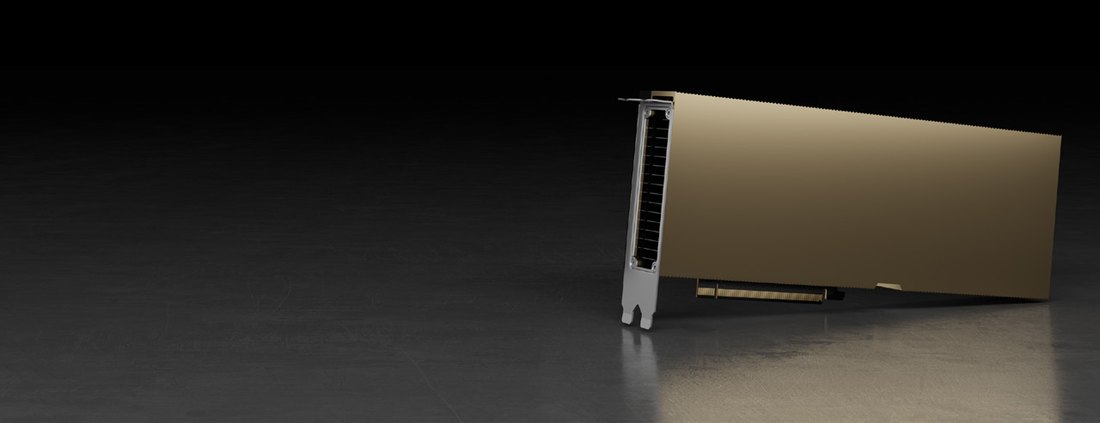
Official PCIe Card Render
The A100 80GB in PCIe form: dual-slot, passively cooled, 300W, no baseboard required. It drops into standard GPU-capable 2U and 4U servers, which is why the PCIe variant is the one most teams can actually deploy.
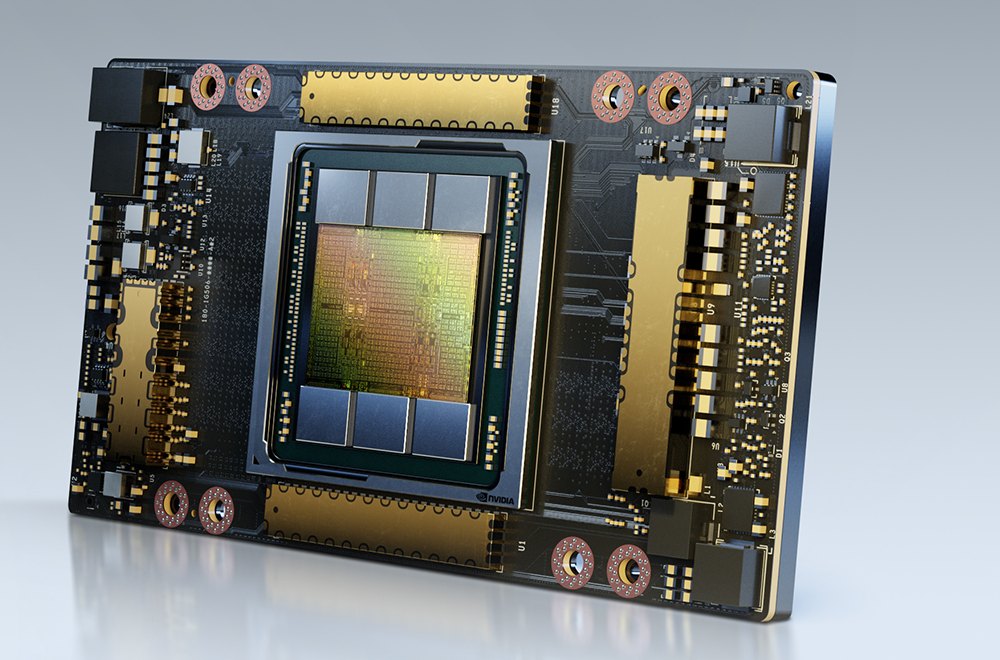
SXM4 Module (Variant)
The same GA100 GPU as an SXM4 mezzanine: 400W and NVLink-enabled for HGX baseboards, with 2,039GB/s of HBM2e bandwidth. We stock both form factors, and we confirm which one your platform takes before quoting.
80
GB HBM2e with ECC
1,935
GB/s memory bandwidth (PCIe)
312
TFLOPS FP16 tensor
7
MIG instances at 10GB each
Key Specifications
| Component | Specification |
|---|---|
| Model | NVIDIA A100 80GB PCIe; SXM4 variant available |
| Architecture | Ampere GA100, 6,912 CUDA cores, 432 third-gen Tensor cores |
| Memory | 80GB HBM2e with ECC, 1,935 GB/s on PCIe; 2,039 GB/s on SXM4 |
| Interface | PCIe Gen4 x16, dual-slot passive (300W); SXM4 400W |
| Compute | FP16-BF16 Tensor 312 TFLOPS / TF32 156 TFLOPS / FP32 19.5 TFLOPS |
| MIG | Up to 7 instances (10GB each) |
| NVLink | PCIe: 2-way bridge; SXM4: 12 links, 600 GB/s |
| Status | Production discontinued — secondary-market supply only |
The A100 80GB is the memory half of the A100 decision, and it is the same GA100 compute die as the A100 40GB — you are buying capacity and bandwidth, not more FLOPs. Choose it when a single card has to hold 13B-65B parameters, when context runs beyond 32K tokens, or when seven 10GB MIG slices are what let one card serve seven tenants. For training clusters or latency-critical 70B serving, step up to the H100; and before you commit to a node, make sure the host CPU and lanes can feed 80GB of HBM — our EPYC 9654 page covers the 4th Gen EPYC pairing most GPU hosts use.
Transparent Pricing
2026 Reference Pricing by Configuration
Tracked Sep 20, 2026 — and this is the thinnest price section on our site, which we would rather say than dress up. Only two data points exist for the A100 80GB PCIe, and both are industry-report ranges rather than individual tracked listings: GPUnex's 2026 GPU market report (published Feb 8, 2026) and Hashrate Index's secondary-market report (published Apr 8, 2026). The section is marked INDICATIVE for that reason.
Used — Report Range (GPUnex, Feb 2026)
$12,000-$18,000
GPUnex's 2026 GPU market report places used A100 80GB PCIe in a $12,000-$18,000 band and describes pricing as drifting slowly downward. This is a report range, not a tracked listing — read it as market direction, not as a quotable price.
Refurbished / Dealer (Hashrate Index, Apr 2026)
$18,900
Hashrate Index's secondary-market report, published Apr 8, 2026, puts refurbished A100 80GB PCIe at the top of the range at approximately $18,900, with a reference position of about $15,000. Refurbished-with-warranty stock sitting above bare-card pricing is the normal shape of this market.
Graded Unit With Burn-In Report (HKCHL quote)
On Request
Two report data points cannot price a real sale, so we quote this card individually. Tell us how many cards, PCIe or SXM4, and the workload, and we return a firm price against a tested unit with its HBM2e ECC and tensor-stress report attached — no placeholder number, no range we cannot stand behind.
Two data points, both industry-report ranges rather than tracked listings — nothing in this section is a transaction price, which is why it is marked INDICATIVE and why graded units are quoted On Request. Volume and project pricing is quoted individually. Sources: GPUnex 2026 GPU market report (published Feb 8, 2026); Hashrate Index secondary-market report (published Apr 8, 2026). Collected Sep 20, 2026. Full dataset: Used Server Price Index.
Origin
Hong Kong Warehouse
Free port — full export documentation
Transit
3–7 Days Air Freight
Tracked, insured, worldwide
Warranty
1-Year Warranty
Diagnostic report in every box
Quality Process
What We Test Before an A100 80GB Ships
HBM2e Counters, Reported Not Judged
All 80GB of HBM2e is scrubbed and the ECC counters are disclosed as numbers. A blank pass/fail hides the thing buyers actually need to know: whether this card has memory error history before it goes into multi-tenant service.
Sustained Tensor Load at Rated Power
Sustained FP16 and BF16 GEMM load at 300W on PCIe units and 400W on SXM4 units, with clocks, power draw and thermals logged. Cards that throttle early under sustained load are rejected, not discounted.
Seven-Slice MIG Rehearsal
All seven 10GB MIG instances are created and run under concurrent load, not just instantiated. Seven isolated tenants on one card is the reason to buy the 80GB over the 40GB, so the isolation is rehearsed before shipping.
Form-Factor and Platform Fit
PCIe and SXM4 units are verified against the platform they are going into — SXM4 lives on an HGX baseboard with different power and cooling, and shipping the wrong variant costs everyone a week.
Provenance and Documentation
Serial format verified, engineering-sample ranges excluded, source fleet declared, and where the card came from a metered environment the logged hours are passed on. Every unit ships with its own report file.
Report in the Box
Every unit ships with its per-machine diagnostic report and warranty. Full process: inspection guide.
Frequently Asked Questions
How much is an NVIDIA A100 80GB in 2026?
Honestly: we can give you a range but not a confident one. The only two data points available put used A100 80GB PCIe at $12,000-$18,000 (GPUnex 2026 GPU market report, published Feb 8, 2026) and refurbished units at the top of the range at about $18,900 with a reference position near $15,000 (Hashrate Index secondary-market report, published Apr 8, 2026). Both are report ranges rather than tracked listings, so the section is marked INDICATIVE and graded units are quoted On Request.
A100 80GB vs A100 40GB — which one do I actually need?
Same GA100 silicon, same 6,912 CUDA cores, same 432 Tensor cores and the same 19.5 TFLOPS FP32 — everything that decides the answer is memory. The 40GB carries HBM2 at 1,555GB/s; the 80GB carries HBM2e at 1,935GB/s on PCIe (2,039GB/s on SXM4), which is roughly a third more bandwidth. Pick the 40GB when your models fit under 40GB — LoRA and QLoRA fine-tuning, quantized inference up to about 13B parameters — and you keep identical compute for materially less money. Pick the 80GB to serve 13B-65B models on one card, to run context past 32K tokens where bandwidth sets your tokens per second, or to run seven 10GB MIG slices instead of seven 5GB ones. Compute-bound work that fits in 40GB runs the same on both.
Should I buy the A100 80GB PCIe or the SXM4 version?
It depends entirely on what you already own. The PCIe card is 300W, dual-slot, passively cooled and slots into standard GPU-capable servers with no baseboard — that is the one most buyers can deploy. The SXM4 module is 400W, mounts on an HGX baseboard, and adds 12-link NVLink plus 2,039GB/s of HBM2e bandwidth, which matters for multi-GPU tensor parallelism. Tell us your server model and we will confirm which variant it takes; we stock both and will not sell you the wrong one.
Is an A100 80GB still worth buying in 2026?
For inference and mid-size fine-tuning, yes — it is the memory capacity per dollar anchor of the secondary market, and the CUDA stack is mature and still supported. Production is discontinued, so every card is secondary-market stock and condition grading is the real product. If your work is large-scale training, or serving 70B models at tight production latency, the H100 is the correct spend and we will say so rather than upselling you an A100. We stock both and quote them side by side.
What condition are HKCHL A100 80GB cards in?
Graded secondary-market stock: ex-datacenter pulls and dealer-refurbished units, each with a burn-in report covering the full 80GB HBM2e ECC scrub, sustained tensor load at rated power, all seven 10GB MIG slices and link validation. Every card carries a 1-year warranty, and the ECC error counters are disclosed as numbers before you pay. High-performance GPU exports are controlled, so we confirm destination eligibility and prepare the documentation before the card is packed.
Get a Current A100 80GB Quote
Tell us quantity, form factor (PCIe or SXM4) and workload — because the tracked market for this card is only two report data points, we quote it individually against tested stock rather than publishing a number we cannot stand behind. Graded units ship worldwide from Hong Kong, usually within one business day of a confirmed order.
Request a Quote