Dell T640 vs R740xd: Tower or Rack Server? (2026)
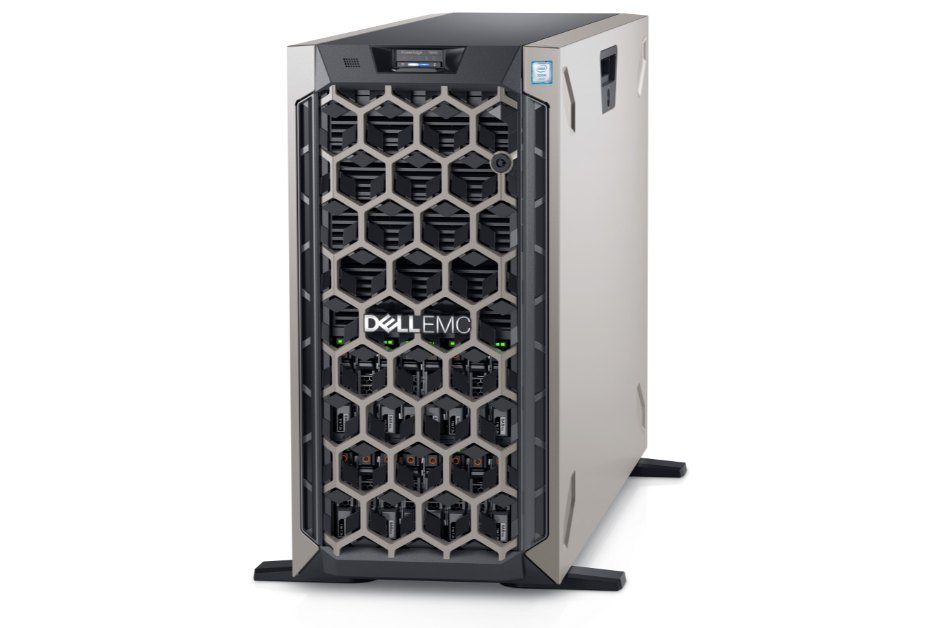
The Dell PowerEdge T640 tower and the PowerEdge R740xd 2U rack are the same Purley-platform 2nd Gen Xeon Scalable workhorse wearing two different bodies. That sameness is exactly what makes the decision difficult — the CPU, memory and PCIe generations are identical, so the choice is not about performance. It is about the room the server will live in, the noise it will make, and the power and cooling conditions around it.
This guide is written for the two buyers who ask us this question most: small and medium businesses putting a server under a desk or in a comms closet, and edge deployments in branch rooms, retail sites and remote locations. Prices below are asking prices from public channel listings captured in our August 2026 HKCHL price index; anything we did not track is marked "On Request" rather than estimated.
Same Platform, Different Silhouette
Both systems run 2nd Gen Intel Xeon Scalable (Cascade Lake/Skylake, LGA3647) with DDR4-2933 memory. The PowerEdge T640 is a 5U tower chassis; the PowerEdge R740xd is a 2U rack chassis built around drive density — the "xd" designation exists because it fronts more storage than the standard R740.
| Factor | PowerEdge T640 (tower) | PowerEdge R740xd (2U rack) |
|---|---|---|
| Form factor | 5U tower, floor-standing | 2U rackmount |
| Drive bays | Up to 18× 3.5" LFF in tower config | Up to 24× 2.5" SFF or 12× 3.5" LFF |
| Accelerators | Up to 4 double-wide GPUs (with PSU option) | Up to 3 double-wide GPUs |
| Cooling acoustics | Office-rated fan curve, audible under load | Rack-rated fans, loud at full tilt |
| Power | Up to 2× 750W / 1100W PSUs | Same PSU options, redundant in rack |
| Management | iDRAC9 (remote) | iDRAC9 (remote) |
The spec that surprises people most: the tower is the storage king. Eighteen 3.5" nearline drives in a standing chassis is the cheapest raw capacity a single node can deliver — which is why small video editing houses, surveillance operators and backup admins keep buying T640s. The R740xd wins when density matters: twenty-four 2.5" bays in 2U means flash-heavy tiers, NVMe primary storage, or a rack that cannot afford floor-standing equipment.
The Four Deciding Factors
Noise and location. This is the first question to answer. Tower servers are engineered with a quieter fan curve than rack servers, because they expect to sit in offices. Even so, a loaded T640 under a desk is audible — it is acceptable in a server closet or a dedicated room, not next to a receptionist. The R740xd's rack fans are designed for ambient air movement in a cabinet; opened at full speed they are the kind of noise that no office tolerates. If the server lives in a non-server room, the tower is the default; if it lives in a cabinet, the rack is.
Power and circuit conditions. A dual-PSU T640 or R740xd on a 1100W configuration needs a circuit that can carry that load, ideally on two separate feeds for redundancy. The tower makes this problem harder because SMB locations often have ordinary office circuits; the rack makes it easier because edge cabinets usually arrive with proper PDUs. Before you buy either, check the breaker and the PDU.
Expansion and future growth. The T640 physically accommodates up to four double-wide GPUs — remarkable for a tower. The R740xd supports three in 2U. But growth plans change: if you might add accelerators or a full secondary storage cage in year two, the tower's internal space is more forgiving. If you are density-bound, the rack wins.
Rack and cabinet conditions. A tower does not need a cabinet; a rack server does not tolerate living outside one. Our guide on choosing the right server rack covers the thermal and airflow math, but the decision here is simpler: no cabinet means tower; cabinet exists and is wired and cooled means rack.
What the 2026 Price Data Shows
The T640 itself has limited public listings we can defend in writing, so pricing is On Request. The R740 platform it shares its generation with is well tracked.
| Item | Configuration / condition | Asking price | Channel, captured |
|---|---|---|---|
| R740 chassis | Bare system | $291.99 | PCSP, 2026-08-07 |
| R740 chassis | Bare system | $499 | The Server Store, 2026-08-07 |
| R740 configured | Starting builds | $713 – $730 | NewServerLife / ServerMonkey, 2026-08-07 |
| R740 configured | 128GB RAM | $1,169.79 | PCSP, 2026-08-07 |
| R740 configured | 256GB RAM | $1,729.71 | PCSP, 2026-08-07 |
| R740 configured | 512GB RAM | $2,209.71 | PCSP, 2026-08-07 |
| R740 configured | Broad range | $1,609 – $4,939 | ServerBasket, 2026-08-07 |
Read the table carefully. Bare R740-class chassis sit at a median of ≈ $395 (captured 2026-08-07), but the configured builds SMB buyers actually want — 128GB to 256GB — cluster at $1,170–$1,730. Above that, memory-heavy or GPU-configured builds climb toward $4,939. Because the R740xd is the dense-storage variant of the same platform, these figures are the fair reference band for it; the T640 tower body typically carries a modest physical-chassis premium or discount depending on inventory, and we quote it live.
The practical takeaway: a tower-or-rack decision at this generation rarely turns out to be a price decision. Both bodies live in the same configured band; choose on room, noise and cabinet conditions, not on the sticker.
What to Verify Before You Buy
Chassis generation and bay count. The R740, R740xd and R740xd2 look related; the bay count and backplane differ. Confirm by part number.
GPU option and risers. Tower four-GPU configurations need the specific riser and PSU option; they are not retrofitted cheaply. Specify GPUs at purchase.
Power delivery. Confirm whether the location can run two PSUs on separate circuits. A redundant server on one circuit is not redundant.
Warranty in writing. Every refurbished PowerEdge from HKCHL ships with a one-year warranty covering mainboard, CPUs, memory and PSUs. Tower and rack alike.
Frequently Asked Questions
T640 or R740xd: which one should an SMB buy?
If the server sits in an office, closet or room without a cabinet, choose the T640 tower — quieter fan curve, up to 18× 3.5" drives, easier expansion. If a wired, cooled cabinet already exists, choose the R740xd for density. Configure built R740-class builds cluster at $1,170–$1,730 for 128–256GB (channel listings, 2026-08-07).
Can I run a T640 under my desk?
Only if you accept audible fan noise under load and the circuit can carry two PSUs. It is office-rated rather than datacenter-rated, but "office-rated" means a corner of an office — not adjacent to a call centre workstation.
Does the R740xd support GPUs?
Yes, up to three double-wide accelerators in 2U with the correct riser and PSU option. The T640 tower supports up to four — the tower is the surprising GPU-friendly chassis. Specify GPUs and power options at purchase; retrofitting is expensive.
Why is T640 pricing "On Request"?
Our August 2026 tracking shows too few defensible public T640 listings to publish a range. The shared R740 platform bands (chassis median ≈ $395; configured $713–$4,939) are the fair reference, and we quote T640 towers live against our Hong Kong stock.
Our Verdict for 2026
The T640 vs R740xd decision is a room decision, not a performance decision. Choose the tower for office storage, backup and quiet spaces with maximum drive and GPU headroom; choose the rack for cabinets, edge rooms and density. Both share the same 2nd Gen Xeon Scalable / DDR4-2933 economics, with configured builds in the $1,170–$1,730 band (captured 2026-08-07). Lock bay count, GPU risers, dual-circuit power and the one-year warranty in writing before you commit.
Talk to Us About Your Tower or Rack Build
HKCHL stocks and sources refurbished Dell PowerEdge T640 towers and R740xd 2U rack servers from our Hong Kong warehouse, shipped worldwide. Tell us the room conditions, drive and GPU requirement, and power circuit; we will recommend the body and come back with a quote against live channel stock, usually within 12 hours.
Need current T640 or R740xd pricing? We source and fully test enterprise servers, DDR4/DDR5 ECC memory and major-vendor platforms from our Hong Kong warehouse. Contact us with your requirement — we answer within 12 hours.