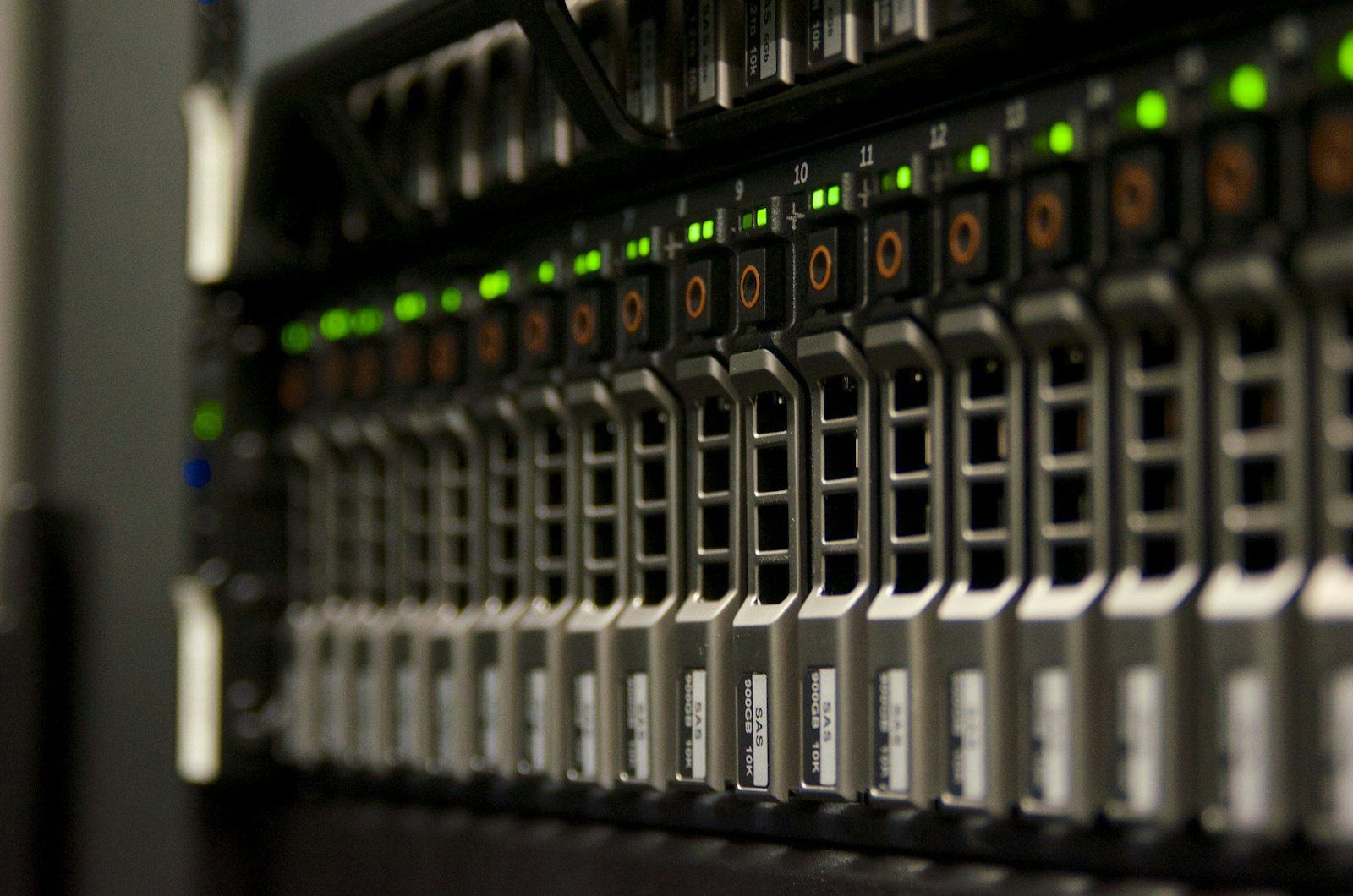
The Dell PowerEdge R750 has become one of the most requested models in our conversations with enterprise buyers—and for good reason. As Dell's 15th-generation mainstream 2U rack server, it sits in the sweet spot of the used server market: new enough to support PCIe Gen4 and 3rd Gen Intel Xeon Scalable processors, old enough that off-lease units are now arriving in volume at attractive prices.
This Dell PowerEdge R750 buying guide covers everything a procurement team needs before signing a purchase order: the full specification breakdown, how the R750 compares to the R740 it replaced and the R760 that replaced it, what refurbished units actually cost in 2026, and the inspection points that separate a great deal from an expensive mistake.
Why the R750 Hits the Sweet Spot in 2026
Every server generation follows the same value curve. In years one through three, prices stay high because supply is limited to early decommissioning. Around years four and five, large enterprise refresh cycles push thousands of units onto the secondary market at once—and prices fall sharply while the platform remains fully capable. The R750, launched in 2021, is now exactly at that point.
Three factors make it particularly compelling right now:
- PCIe Gen4 throughout. Unlike the R740 (PCIe Gen3), the R750 supports Gen4 across its expansion slots and NVMe backplanes, doubling I/O bandwidth for storage-heavy and virtualization workloads.
- 3rd Gen Xeon Scalable (Ice Lake). Up to 40 cores per socket, eight memory channels, and support for Intel Optane PMem 200 series. For most enterprise workloads, this generation remains more than sufficient.
- Massive off-lease supply. Organizations that bought R750s in 2021–2022 on four-year refresh cycles are releasing them now, which means buyers can be selective about configuration and condition.
Based on our market observation, the R750 currently offers the best performance-per-dollar ratio of any 2U x86 server on the secondary market.
Key Specifications at a Glance
| Component | Specification |
|---|---|
| Form factor | 2U rack |
| Processors | 2× 3rd Gen Intel Xeon Scalable (Ice Lake), up to 40 cores each |
| Memory | 32× DDR4 DIMM slots, up to 8TB (RDIMM/LRDIMM), 3200 MT/s |
| Storage | Up to 24× 2.5" SAS/SATA/NVMe or 12× 3.5" front bays |
| Expansion | Up to 8× PCIe Gen4 slots |
| Networking | OCP 3.0 mezzanine + PCIe NICs, 1/10/25/100GbE options |
| Management | iDRAC9 Enterprise |
| Power | Redundant PSUs, 800W–2400W options |
Two configuration details matter more than buyers expect. First, memory bandwidth depends on populating all eight channels per CPU—a half-populated R750 loses a significant share of its memory throughput. Second, the NVMe backplane variants command a premium; if your workload is storage-bound, confirm the exact backplane before comparing prices.
R750 vs R740 vs R760: Which Generation Should You Buy?
| R740 (14G) | R750 (15G) | R760 (16G) | |
|---|---|---|---|
| CPUs | 1st/2nd Gen Xeon Scalable | 3rd Gen Xeon Scalable | 4th/5th Gen Xeon Scalable |
| Memory | DDR4-2933, 24 slots | DDR4-3200, 32 slots | DDR5-4800, 32 slots |
| PCIe | Gen3 | Gen4 | Gen5 |
| Used price (typical base) | $500–$1,200 | $2,900–$4,100 | $4,500+ |
| Best for | Budget labs, light virtualization | Mainstream production, virtualization, storage | New-platform requirements, DDR5 workloads |
The R740 remains the budget champion for development environments and homelabs. The R760 makes sense when you specifically need DDR5 memory or PCIe Gen5 devices. For everything in between—production virtualization clusters, VDI, database nodes, backup infrastructure—the R750 is the balanced choice and the model we see most often in enterprise procurement requests this year.
Which R750 Configuration Fits Your Workload?
- Virtualization hosts: Dual Xeon Gold 6338/8352, 512GB–1TB RAM, mixed NVMe + SAS. Prioritize memory channels fully populated.
- Storage nodes: 12× 3.5" chassis with high-capacity HDDs, single mid-range CPU, HBA mode controllers.
- VDI / compute-dense: Dual high-core CPUs, 2.5" all-flash backplane, 25GbE networking.
- GPU-assisted workloads: The R750 supports up to two double-width GPUs; verify the GPU-enablement kit and PSU rating are included.
What a Refurbished R750 Costs in 2026
Used pricing varies with configuration. Based on publicly listed asking prices we tracked across major US and UK refurbishers in August 2026 (PCSP, ServerMonkey, NewServerLife, The Server Store, Dell Outlet, and others), current secondary-market ranges look like this:
- Bare chassis (chassis + motherboard + PSUs, minimal or no CPU/RAM/drives): $2,950–$4,100
- Entry configured systems (single or dual mid-range CPU, 64–128GB RAM, basic storage): $5,300–$7,600 — Dell's own Outlet-refurbished units list around $7,600
- Typical production spec (dual Xeon Gold 83xx, 256–512GB RAM, 4–8 drives): $7,500–$9,300
Two useful anchors from our August 2026 snapshot: a 24-bay NVMe bare chassis listed at $3,499, and a dual 8358 / 64GB / 8×600GB build at $9,062. We publish the full tracked dataset with source links in our quarterly Used Server Price Index.
Industry benchmarks suggest these prices will continue softening through 2026 as more off-lease supply arrives—though NVMe-backplane units are holding value better than SAS/SATA-only chassis. When comparing quotes, normalize for exact CPU model, RAM population, backplane type, and included rail kits and PSUs; two "R750" listings can differ by 40% in real value.
What to Check Before You Buy a Used R750
A refurbished Dell PowerEdge R750 from a reputable supplier should arrive with documentation, not promises. Our inspection checklist for this model includes:
- iDRAC lifecycle logs. Power-on hours, thermal history, and any recorded hardware faults tell you how the server actually lived.
- CPU and memory diagnostics. Full memory test across all populated DIMMs, plus verification that all 32 slots are detected—slot failures are a known repair cost on heavily used boards.
- Backplane and drive health. SMART data on all included drives, plus confirmation of the exact backplane variant (NVMe vs SAS/SATA-only).
- Firmware currency. iDRAC, BIOS, and backplane firmware updated to supported versions; check for Dell service tag transferability if you plan to add ProSupport.
- Physical condition. PCIe riser latches, fan modules, and PSU handles are the most commonly damaged parts during de-racking.
Suppliers who cannot produce per-unit diagnostic reports are asking you to take their word for it. In our experience supporting enterprise buyers, that is a risk that rarely pays off. Our hardware inspection guide explains the full verification process we run on every unit.
Frequently Asked Questions
Is the Dell PowerEdge R750 still worth buying in 2026?
Yes. With PCIe Gen4, 3rd Gen Xeon Scalable CPUs, and 32 DDR4 slots, the R750 handles mainstream production workloads comfortably, and off-lease supply has pushed used prices to roughly 25–35% of original list. It is the current sweet spot of the 2U secondary market.
What is the difference between the R750 and the R750xs?
The R750xs is a cost-optimized variant: fewer PCIe slots, a maximum of 16 DIMM slots, and reduced backplane options. For memory-dense or expansion-heavy workloads the full R750 is worth the premium; for straightforward compute nodes, the xs variant can save 15–25%.
How many watts does a Dell PowerEdge R750 use?
Idle draw for a typical dual-CPU configuration is 150–250W; under full load, 600–900W depending on CPU TDP and drive count. The available 2400W PSU option exists mainly for GPU configurations.
Can the R750 run NVMe drives?
Yes—provided the chassis has the NVMe-enabled backplane. The 24× 2.5" variant supports direct-attached NVMe over PCIe Gen4. Always confirm the backplane type in the quote, as retrofitting is expensive.
The Bottom Line
The Dell PowerEdge R750 is where capability, availability, and price intersect in 2026. For procurement teams building virtualization clusters, storage nodes, or general-purpose production capacity, it delivers 80–90% of a new platform's usefulness at roughly a third of the cost—provided the unit is properly tested before it ships.
If you are evaluating R750 configurations for an upcoming project, our team can quote current availability across multiple tested configurations, from base chassis to fully populated NVMe builds. Every unit we ship goes through documented per-machine diagnostics with warranty support. Contact us for a current quote — telling us your target workload is usually enough for us to recommend the right spec on the first reply.