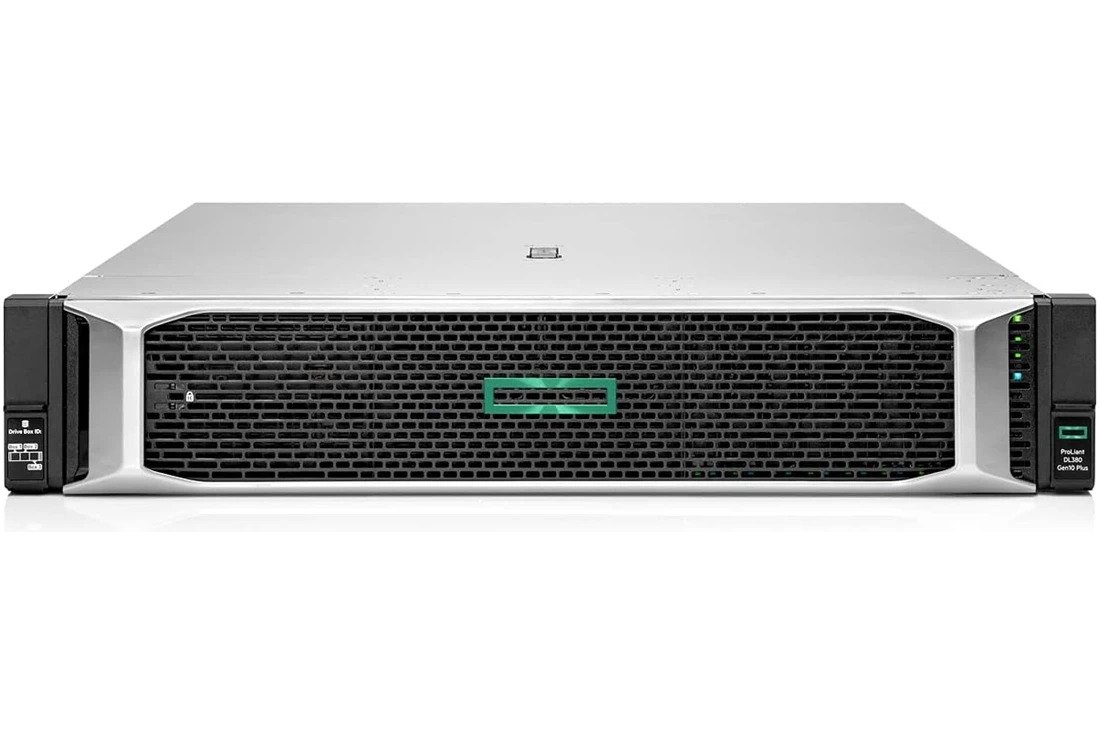
HPE ProLiant DL380 Gen10 Plus Buying Guide (2026)
The HPE ProLiant DL380 Gen10 Plus is in an awkward position on most buyers' spreadsheets. It sits between the massively liquid Gen10 platform and the DDR5 / PCIe 5.0 Gen11, and as a result it gets overlooked — even though, for a wide range of workloads, it is the generation that actually pays off. Decommissioning waves from large cloud and enterprise fleets are now feeding refurbished Gen10 Plus systems back into the channel, and prices once uncompetitive have quietly moved into buying territory.
This guide sets out where the DL380 Gen10 Plus sits against the Gen10 and Gen11, what tracked channel pricing tells us in 2026, and which scenarios justify buying this platform. Every price below is an asking price from public channel listings captured in our August 2026 HKCHL price index; anything we did not track is marked "On Request" rather than estimated.
Where the Gen10 Plus Sits Against Gen10 and Gen11
The practical gap buyers feel is mostly invisible on a spec sheet, so it helps to lay the three generations side by side.
| Platform | CPU generation | Socket | Memory | Fabric / IO |
|---|---|---|---|---|
| DL380 Gen10 | 1st / 2nd Gen Xeon Scalable (Skylake, Cascade Lake) | LGA3647 | DDR4-2933 | PCIe 3.0 / 4.0 |
| DL380 Gen10 Plus | 3rd Gen Xeon Scalable (Ice Lake-SP) | LGA4189 | DDR4-3200 | PCIe 4.0 |
| DL380 Gen11 | 4th / 5th Gen Xeon Scalable (Sapphire / Emerald Rapids) | LGA4677 | DDR5-4800 | PCIe 5.0 |
The headline insight is that the Gen10 Plus keeps DDR4. That is good news for a budget buyer, because DDR4 RDIMMs remain a fraction of DDR5 pricing and supply for years after a platform turns over. What the Gen10 Plus adds is Ice Lake-SP: up to 40 cores per socket, materially better AVX-512 and cryptography throughput, and PCIe 4.0 across the slot stack. The Gen11 then charges you a premium for DDR5 bandwidth and PCIe 5.0 — two upgrades that only a narrow set of workloads can actually consume.
That middle position is exactly why the Gen10 Plus confuses procurement. It is too new to be as cheap as the Gen10, and too old to be spec-bumper against Gen11. Buyers who skip it usually do so on instinct; buyers who model it land on it.
What the 2026 Price Data Shows
Our index captured Gen10 Plus listings in mid-August 2026. Public listings for this platform are thin, so treat the range below as indicative rather than firm.
| Item | Configuration / condition | Asking price | Channel, captured |
|---|---|---|---|
| Gen10 Plus configured | Starter price, promotional (was $4,183) | $4,133 | NewServerLife, 2026-08-12 |
| Gen10 Plus bare system | Ex-VAT | €4,115 (≈ $4,445) | Servermall EU, 2026-08-12 |
| Gen10 Plus configured, new China channel | Xeon 4310 / 32GB / 8SFF | $2,643 | Alibaba China, 2026-08-12 |
| Gen10 Plus refurbished configured | Combined tracked range | ≈ $4,130 – $4,980 | Combined channels incl. Servermall incl.-VAT €4,979 ≈ $5,378, 2026-08-12 |
Three observations matter.
First, refurbished Gen10 Plus configured systems cluster around $4.1k–$5k. That is a real step up from the Gen10, and the premium buys Ice Lake core count — not a feature you will use.
Second, East Asian channel pricing changes the comparison. The new China-channel configured unit at $2,643 (Xeon 4310 / 32GB / 8SFF, captured 2026-08-12) shows the landed-cost story APAC buyers see regularly: a Gen10 Plus sourced out of China can undercut a Western refurbished quote on the same chassis — the regional gap our Hong Kong warehouse is built around.
Third, the Gen10 has become a bargain reference point. Our August 7, 2026 tracking puts DL380 Gen10 bare systems at a median of ≈ $440 (PCSP listings from $303.74 chassis to $574.92 with a Silver 4114), and mainstream configured builds in the $1,200–$2,150 band (PCSP; ServerBasket UAE listings AED 5,429–35,079 ≈ $1,480–$9,558). If your workloads tolerate 1st / 2nd Gen cores, the Gen10 is nearly half the price of the Gen10 Plus.
The CPU Choice Is Where the Budget Is Won or Lost
Of every component in a refurbished 2U build, the processor has the widest price spread. The reference SKU buyers keep asking about is the Xeon Gold 6338 — 32 Ice Lake-SP cores per socket.
Our August 7, 2026 tracking shows refurbished 6338 CPUs trading at a median of ≈ $2,050, spanning $1,448 (Bytestock UK, refurbished low-stock quote) to $2,780.40 (eBay refurbished), with ETB Technologies at $1,529.35 and Aventis Systems at $2,571. New kits sit at $2,797 (GlobalOne, HPE P36928-B21) to $3,701 (Scan UK, new OEM). The low-power 6338N variant appears as low as ≈ $1,150 on secondary listings, worth flagging if your rack is thermally constrained.
Pair two refurbished 6338 CPUs inside a refurbished Gen10 Plus chassis and you get a 64-core dual-socket node at a fraction of the new-platform quote — the platform's real cost-per-core floor, and the reason to buy CPUs from a source that guarantees production steppings.
When to Buy Gen10 Plus Instead of Gen11
Buy the Gen10 Plus when any of the following describe you:
- Virtualization, VDI and general consolidation where DDR4 memory capacity, not DDR5 bandwidth, limits density. Thirty-two DIMM slots plus cheap DDR4 are the whole point.
- Accelerator-feeding nodes where PCIe 4.0 x16 slots feed cards, and the cards' bandwidth — not the interconnect generation — is the constraint.
- Mixed fleets where you already carry DDR4 spares, drives, risers and rail kits. Reusing spares cuts total cost well below the sticker comparison.
- Quarter-bound deliveries where you need certified enterprise gear now and cannot wait on new-platform lead times.
Skip the Gen10 Plus when: your workload genuinely needs the 12-channel DDR5 bandwidth of newer platforms (HPC, large in-memory databases), you are starting a five-year refresh on a brand-new platform, or your target software stack already saturates PCIe 5.0 lanes. In those cases Gen11 or a current EPYC platform is the honest answer, and forcing the cheaper node will cost more later.
What to Verify Before You Buy
Production steppings, not samples. Ice Lake-SP engineering and qualification parts circulate in the channel. Require confirmation of retail production CPUs in writing.
Memory population and speed. Gen10 Plus runs DDR4-3200; mixing rank configurations silently drops your memory speed. Specify the exact DIMM kit you will receive.
GPU option and power. Double-wide accelerators need the high-output PSU and matching riser configuration. If you plan GPUs later, specify the chassis and PSU upfront — retrofitting is expensive.
Warranty in writing. Every refurbished system from HKCHL ships with a one-year warranty covering mainboard, CPUs, memory and power supplies. Demand the same from any competitor; an untested "as-is" chassis is not the same product.
Frequently Asked Questions
Is the DL380 Gen10 Plus worth buying in 2026?
Yes for core-and-memory-bound workloads. It buys Ice Lake-SP cores at DDR4 memory economics, and refurbished configured systems track ≈ $4,130–$4,980 (channel listings captured 2026-08-12). It is not worth it if DDR5 bandwidth or PCIe 5.0 is on your critical path.
How does the Gen10 Plus compare with the Gen10 and Gen11?
Gen10 is the cheapest option: PCIe 3/4, DDR4-2933, 1st / 2nd Gen Xeon, with mainstream configured builds at ≈ $1,200–$2,150 (2026-08-07). The Gen10 Plus adds Ice Lake cores, DDR4-3200 and PCIe 4.0 at ≈ $4,130–$4,980 refurbished. The Gen11 adds DDR5 and PCIe 5.0 at new-platform prices, where refurbished supply is still shallow.
Should I specify a Xeon Gold 6338?
For dual-socket consolidation, yes. At a refurbished median of ≈ $2,050 (2026-08-07) it is the best cost-per-core SKU on this platform. Larger Gold and Platinum parts add single-thread boost, but the value curve bends down fast above 32 cores.
Are refurbished Gen10 Plus systems safe for production?
Yes when properly tested. Power-on self-test, full memory test and a documented one-year warranty remove most of the risk; failure modes on this platform after decommissioning are well understood and recoverable. Untested "as-is" inventory is a different product, and we would not recommend it for a primary tier.
Our Verdict for 2026
The Gen10 Plus is the quiet value buy of the 2026 enterprise 2U market: Ice Lake cores, DDR4 economics and PCIe 4.0 without the DDR5 premium. Buy it for consolidation, virtualization and GPU-feeding nodes. Do not buy it if your workload depends on DDR5 bandwidth. Model the build around refurbished 6338-class CPUs, and pin production steppings, DIMM configuration and the one-year warranty in writing.
Talk to Us About Your DL380 Gen10 Plus Build
HKCHL stocks and sources HPE ProLiant Gen10 Plus systems and matched 3rd Gen Xeon CPUs from our Hong Kong warehouse, in refurbished and configured condition, shipped worldwide. Send us your target cores, memory, drive bays and GPU requirement, and we will come back with a quote against live channel stock, usually within 12 hours.
Need current pricing on a Gen10 Plus build or a Gen10 comparison? We source and fully test enterprise servers, DDR4/DDR5 ECC memory and Dell, HPE and Lenovo platforms from our Hong Kong warehouse. Contact us with your requirement — we answer within 12 hours.